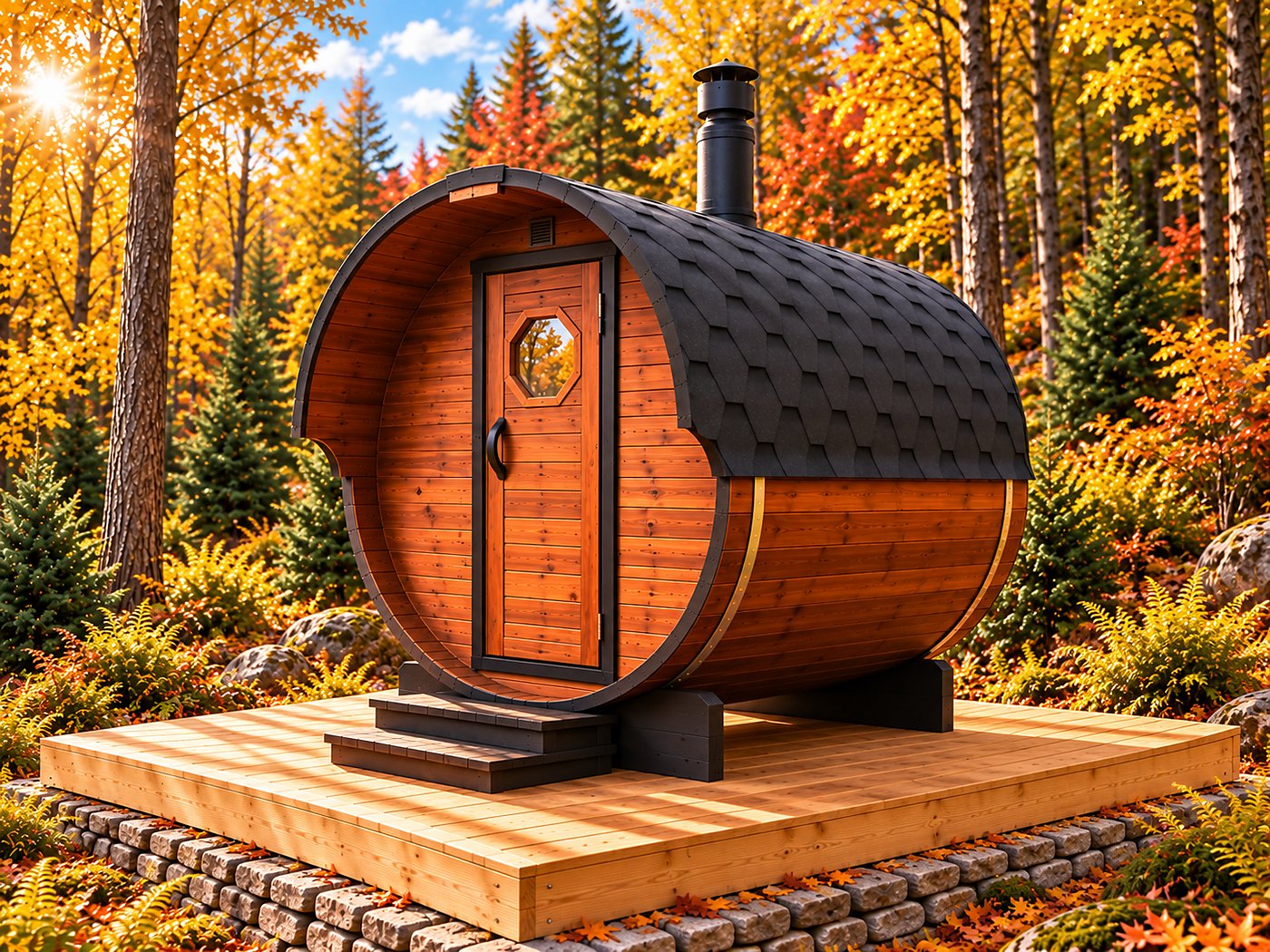
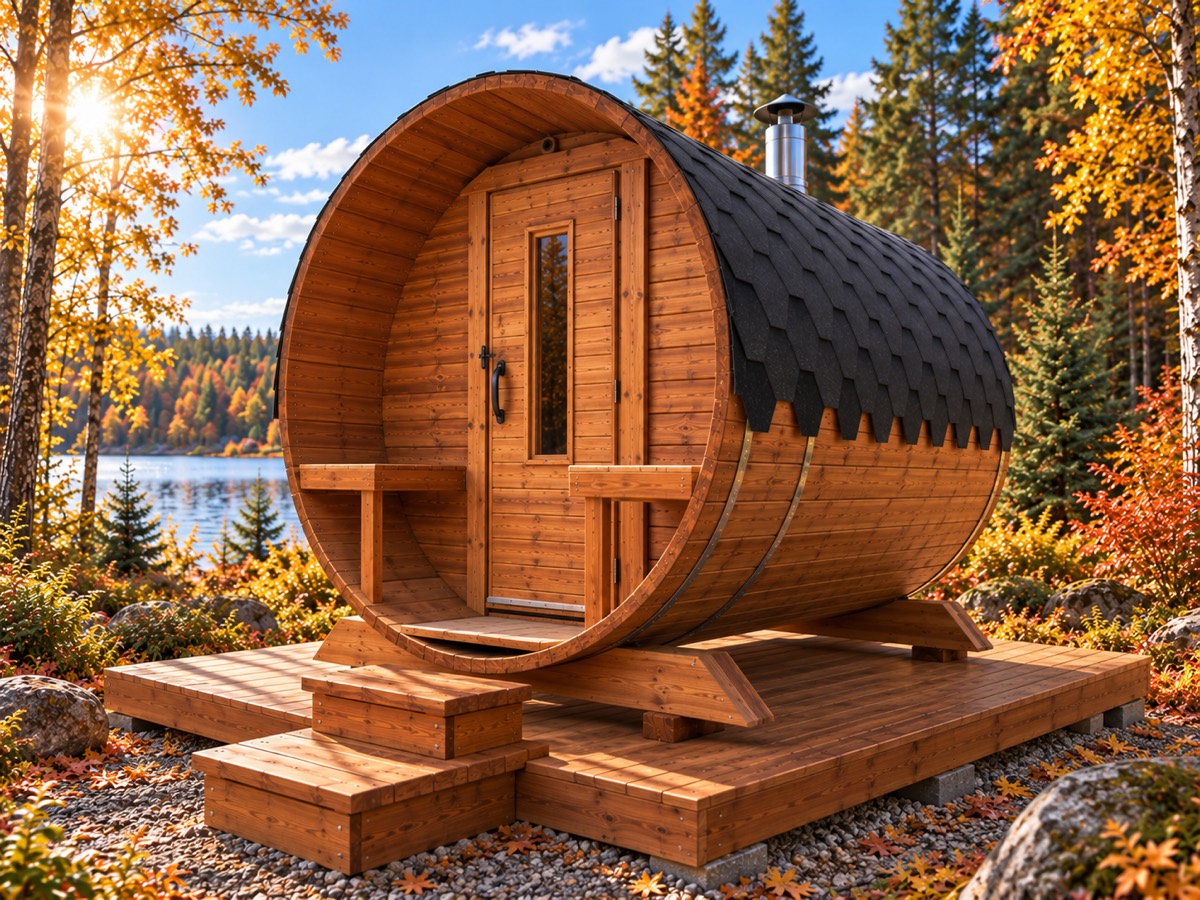
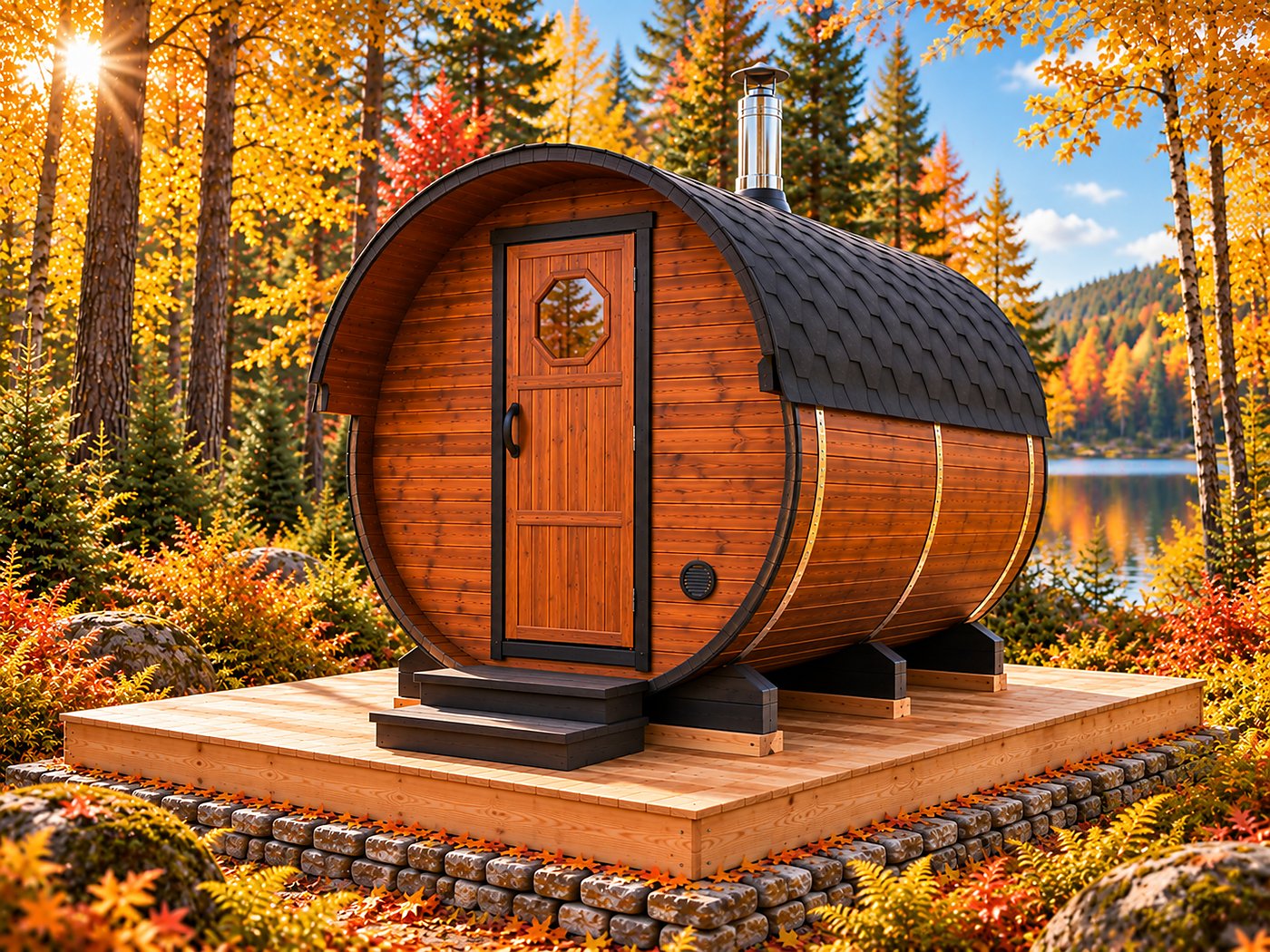
How Many kW Does a Barrel Sauna Stove Need?
A simple rule to size a sauna stove: roughly 1 kW per cubic metre, with a worked example, reserve for glazing and wind, and what to check if it stays cold.
Read →This decision can later only be changed by altering the structure and the electrics. Make it deliberately, not because it is what happened to be in the quote.
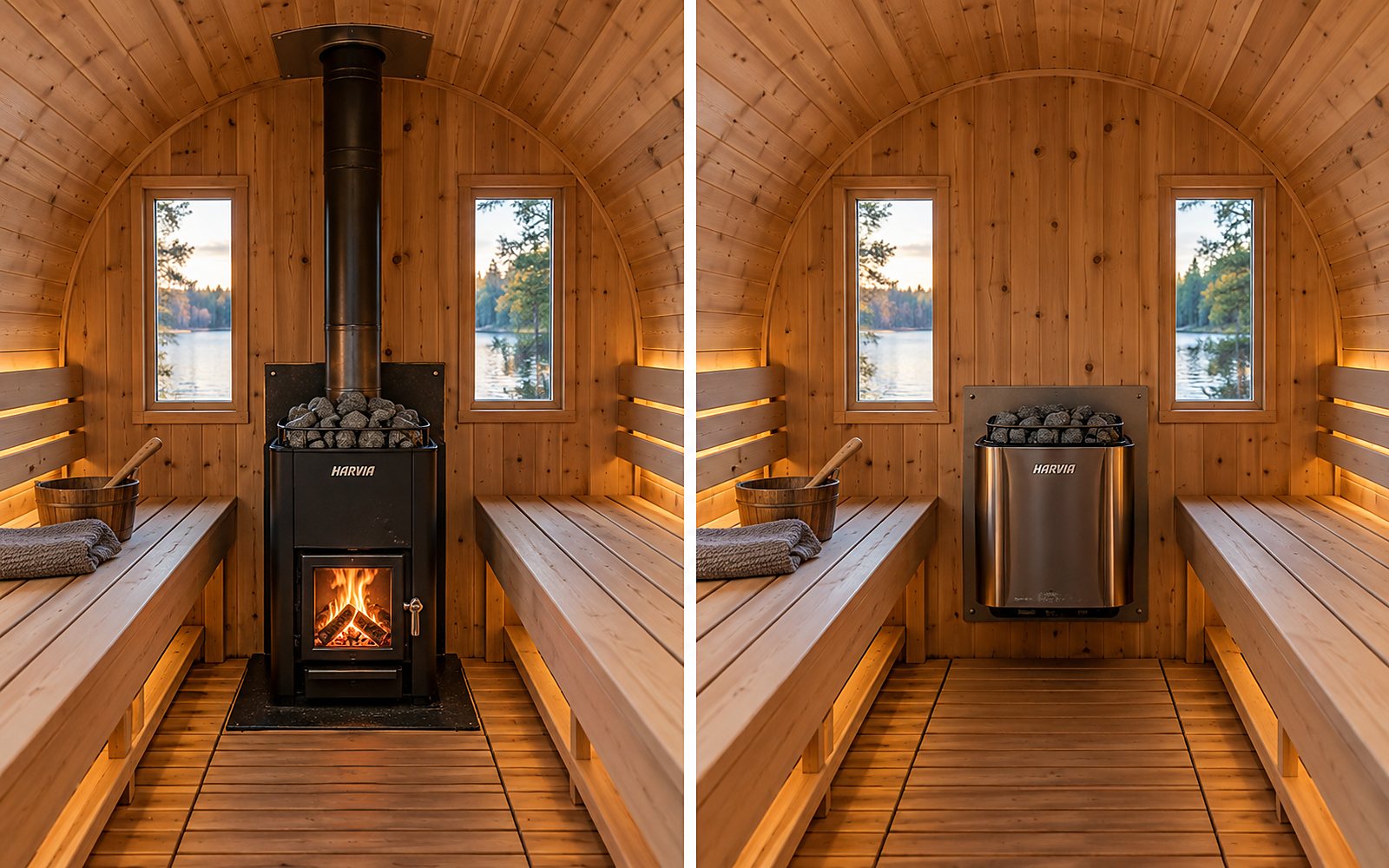
The biggest advantage is that it needs no electrical supply. If the sauna stands at the far end of the garden, by a lake or on a plot without a power connection, it is often the only sensible solution.
The second advantage is harder to measure but decisive for many people: the character of the heat. Wood gives a drier, stronger heat and a scent no electric stove can imitate.
Running costs are low: a full heat-up of a 3 m barrel sauna takes roughly 8–12 kg of wood.
The downsides: the stove needs tending. You light it, add logs and remove ash. You need dry wood and a covered store, and the flue must be cleaned once a year.
We recommend the wood-fired Etna 12 with the firebox outside, so the fire is lit and tended from outside the sauna room.
Switch on and you are done. With a controller and timer the sauna is warm at the time you choose, so you can step straight in after work. That feature often decides whether a sauna is used twice a week or twice a month.
No smoke, no ash, no chimney, and no arguments with the neighbours about smoke.
The main drawback: larger stoves (about 8–9 kW) need a dedicated, properly protected circuit with enough capacity, and some models require a three-phase supply, which many homes do not have. Running a cable deep into the garden can cost more than the stove itself.
We offer electric Harvia stoves as an alternative to wood.
Is there a suitable supply at the house? Is the consumer unit adequate and is there room for another circuit? Always have a qualified electrician do the connection, and ask them which stove ratings your supply can take.
Both are similar: 30–45 minutes depending on size and outside temperature.
The difference lies elsewhere: an electric stove can be started in advance by timer or app, while with wood someone has to go out and light it.
Wood stove: open fire, a hot flue and flying sparks. A spark guard, correct clearances to the timber at the flue passage and supervision are a must.
Electric stove with controller: switch-off after a set time and overheat protection. If you let the sauna to holiday guests or other people use it unsupervised, that is not an extra but a requirement.
No power on the plot: wood.
Sauna by the house, used after work: electric with a controller and timer.
Holiday home or holiday let: wood for the experience, or electric with automatic switch-off for guest safety.
Tight building plots and close neighbours: electric, to avoid trouble over smoke.
Name and phone number — we will message you on WhatsApp, help you pick the size and price it with delivery to your address.
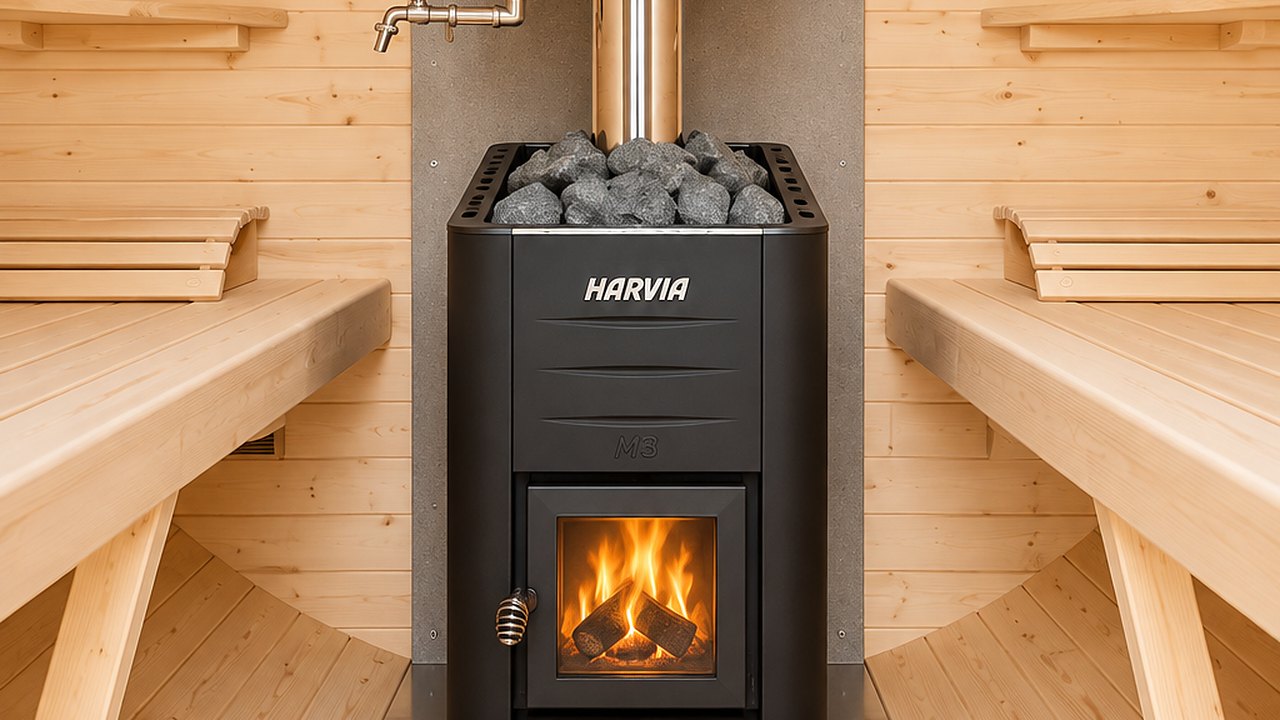
A simple rule to size a sauna stove: roughly 1 kW per cubic metre, with a worked example, reserve for glazing and wind, and what to check if it stays cold.
Read →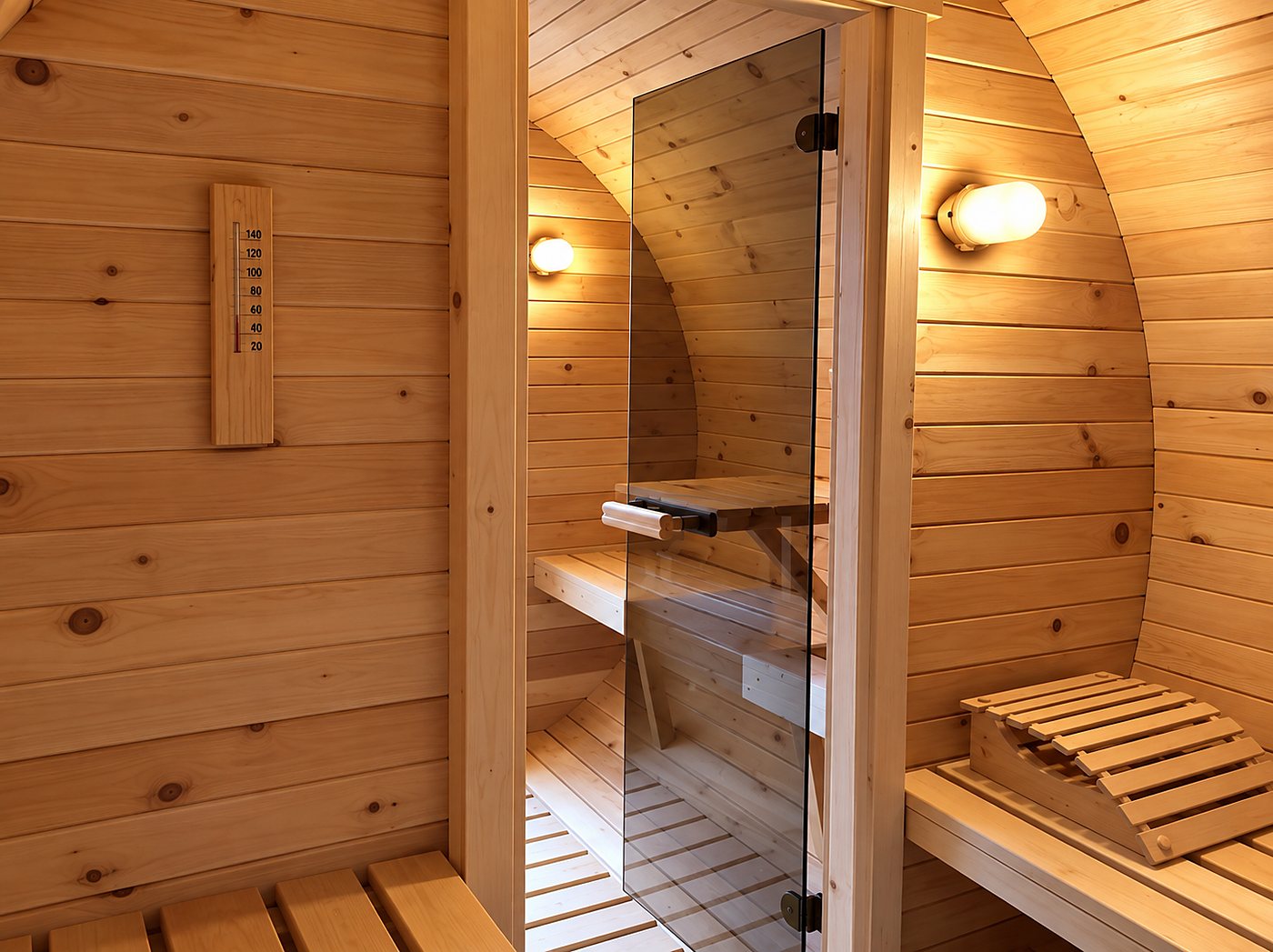
Running costs of a garden sauna: wood per evening, electricity per session, the costs people forget, and the habits that cut the bill the most.
Read →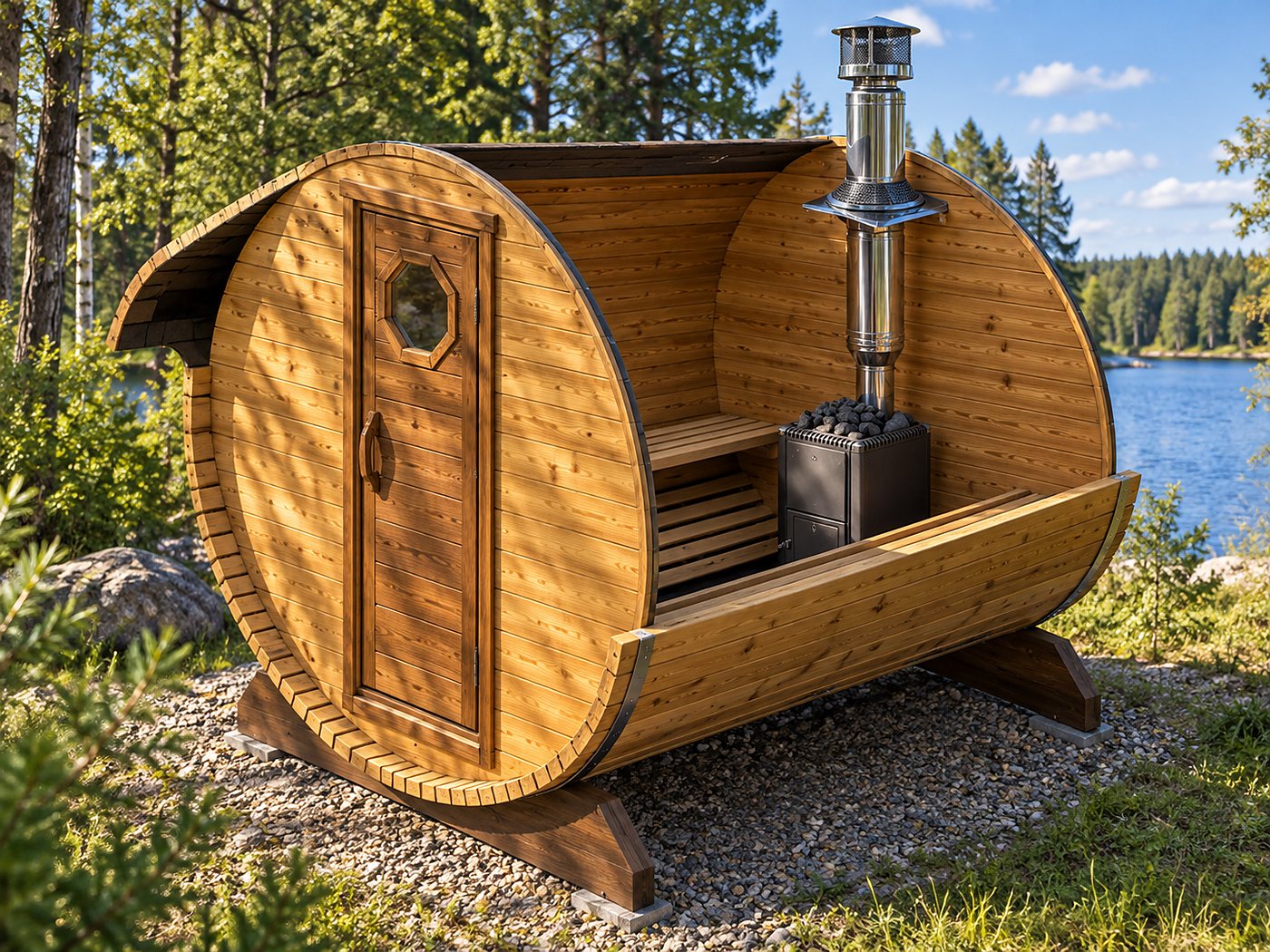
Lighting a wood-fired stove in a barrel sauna: preparation, stacking logs, air supply, topping up and the mistakes that cost you temperature.
Read →Name and phone number — we will message you on WhatsApp, help you pick the size and price it with delivery to your address.
Cookies
Besides the essential ones, we use cookies for visit statistics and measuring ad performance. We turn them on only with your consent. Privacy.